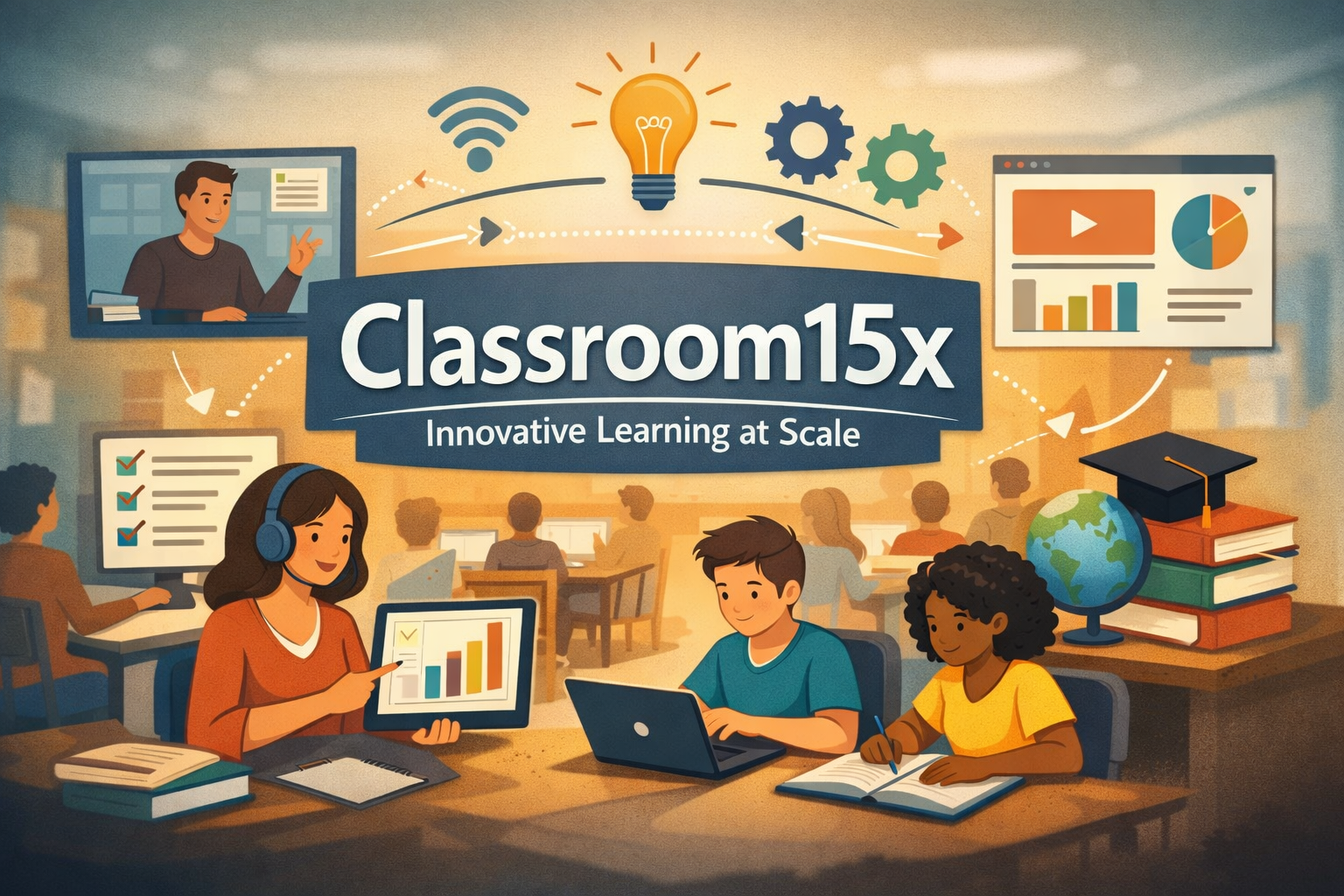
Classroom15x Explained: A Deep, Practical Guide for Educators
Understanding Classroom15x Clearly
Classroom15x is a term that is increasingly appearing in discussions around modern learning environments, digital classrooms, and scaled education models. At its core, classroom15x refers to an approach to teaching and learning that aims to multiply classroom effectiveness without multiplying complexity for teachers or learners.
Based on observed usage across education forums, EdTech discussions, and practitioner conversations, classroom15x is not a single product or fixed platform. Instead, it represents a scalable classroom framework where learning outcomes, engagement, and instructional reach are expanded far beyond the traditional one teacher, one class model.
Because the term is still emerging and not formally standardized, any explanation should remain grounded in real classroom practice rather than marketing language. In practical terms, classroom15x describes classrooms that are designed to deliver roughly fifteen times more value through a mix of technology, pedagogy, and operational design.
This value does not mean replacing teachers. It means enabling teachers to teach smarter, reach more learners meaningfully, and reduce repetitive workload.
Why Classroom15x Matters in Today’s Education Landscape
Education systems worldwide are under pressure. Teacher shortages, growing class sizes, limited budgets, and rising learner expectations all intersect at the classroom level.
Classroom15x matters because it addresses these pressures without sacrificing learning quality.
Educators who experiment with scalable classroom models often report three consistent needs:
- Reaching more learners without burnout
- Maintaining instructional quality across larger or blended groups
- Preserving human connection in increasingly digital spaces
Classroom15x frameworks aim to balance these needs by redesigning how learning happens rather than simply adding more tools.
From my experience working with educators adapting blended and hybrid classrooms, the biggest shift is mindset. Instead of asking how to teach more students, the question becomes how to design learning systems that support students even when the teacher is not actively presenting.
Core Principles Behind Classroom15x
Although implementations vary, effective classroom15x environments usually share several foundational principles.
Intentional Learning Design
Lessons are structured around outcomes rather than time. Students progress through clearly defined learning paths, often supported by self paced materials, formative checks, and peer collaboration.
This reduces dependency on constant direct instruction.
Technology as an Enabler, Not a Centerpiece
Technology supports scale but does not replace pedagogy. Tools are chosen to automate low value tasks like grading quizzes or distributing resources so teachers can focus on feedback, mentoring, and adaptation.
Asynchronous and Synchronous Balance
A key feature of classroom15x is mixing live interaction with independent work. Students engage with content on their schedule while still benefiting from real time discussion, clarification, and social learning.
Feedback Loops at Scale
Rather than one teacher giving individual feedback to dozens of learners manually, classroom15x models often use rubrics, exemplars, and structured peer review to multiply feedback opportunities.
Real World Benefits for Teachers
The biggest misconception is that scalable classrooms add more work. When implemented thoughtfully, the opposite is often true.
Teachers using classroom15x strategies report benefits such as:
- Reduced repetitive explanation of the same concepts
- More time for one on one support where it truly matters
- Clear visibility into learner progress through dashboards or check ins
- Less burnout caused by constant performance pressure
One educator I worked with redesigned a large introductory course using modular content and peer supported assignments. While initial setup took time, their weekly workload dropped significantly by the second term.
The key insight was front loading effort to save long term energy.
Student Experience in a Classroom15x Environment
For learners, classroom15x can feel very different from traditional classrooms.
Instead of passively listening, students often:
- Take more ownership of pacing and progress
- Engage with content in multiple formats
- Collaborate more frequently with peers
- Receive faster feedback cycles
However, this model is not automatically effective for every learner. Students unfamiliar with self directed learning may initially struggle.
That is why strong onboarding, clear expectations, and ongoing support are essential.
Also read about Yo Gotti Net Worth: Inside the Rise of a Southern Hip Hop Mogul.
Common Challenges and Honest Limitations
No educational model is without tradeoffs. Classroom15x has real challenges that must be acknowledged.
Initial Setup Complexity
Designing scalable learning systems takes planning time. Teachers may need institutional support, professional development, or collaboration time.
Digital Access Inequality
Technology enabled classrooms assume reliable access to devices and internet. In under resourced contexts, this can widen gaps if not addressed thoughtfully.
Risk of Over Automation
If poorly implemented, classroom15x can drift into content dumping or excessive automation. This undermines trust and reduces meaningful engagement.
Assessment Integrity
Scaling assessments requires careful design to maintain academic integrity while still allowing flexibility.
Being transparent about these challenges builds trust and aligns with people first content principles.
Classroom15x in Different Educational Contexts
Classroom15x is not limited to one education level. Its principles adapt across contexts.
K 12 Education
In schools, classroom15x often appears as blended learning models. Teachers rotate between small group instruction, independent practice, and digital stations.
The goal is differentiated support rather than uniform pacing.
Higher Education
Universities apply classroom15x through flipped classrooms, large enrollment courses with active learning, and modular course design.
Corporate and Professional Training
Organizations use classroom15x principles to onboard large groups efficiently while maintaining role specific relevance. Microlearning, simulations, and peer cohorts are common features.
Actionable Steps to Implement Classroom15x Thoughtfully
For educators interested in experimenting, starting small is critical.
Step 1 Clarify Learning Outcomes
Before tools or content, define what learners must be able to do. Clear outcomes guide every design decision.
Step 2 Modularize Core Content
Break lessons into short, reusable modules. This allows learners to revisit material and reduces repeated explanations.
Step 3 Design Feedback Systems
Plan how learners will receive feedback at scale. This might include rubrics, automated checks, or structured peer review.
Step 4 Pilot and Iterate
Test classroom15x strategies with one unit or class. Gather learner feedback and refine.
Step 5 Maintain Human Presence
Even in scalable systems, visible teacher presence matters. Regular announcements, video check ins, and discussion participation build trust.
Measuring Success Beyond Test Scores
Traditional metrics alone do not capture classroom15x effectiveness.
Additional indicators include:
- Learner engagement patterns
- Completion and retention rates
- Quality of learner questions and discussions
- Teacher workload sustainability
Qualitative feedback is just as important as quantitative data.
Ethical and Pedagogical Considerations
Scaling education raises ethical questions. Classroom15x should never be used to justify reducing educational quality or teacher support.
Responsible use focuses on empowerment rather than efficiency alone.
This aligns closely with recent search quality guidance emphasizing helpful, experience based content that genuinely serves users.
Frequently Asked Questions
Is classroom15x a specific software or platform?
No. It is best understood as a framework or approach rather than a single tool.
Can small schools use classroom15x methods?
Yes. Many strategies work well in small settings when adapted to context.
Does classroom15x replace teachers?
No. It aims to amplify teacher impact, not remove the human role.
Is classroom15x suitable for younger learners?
It can be, but requires strong structure, guidance, and parental or institutional support.
How long does it take to see results?
Most educators notice workload and engagement changes after one full learning cycle.
Conclusion
Classroom15x represents a shift in how learning environments are designed and experienced. Rather than focusing on scale for its own sake, it emphasizes thoughtful systems that allow teachers and learners to thrive together.
When grounded in real practice, ethical design, and clear learning goals, classroom15x can help education systems respond to modern challenges without losing their human core.