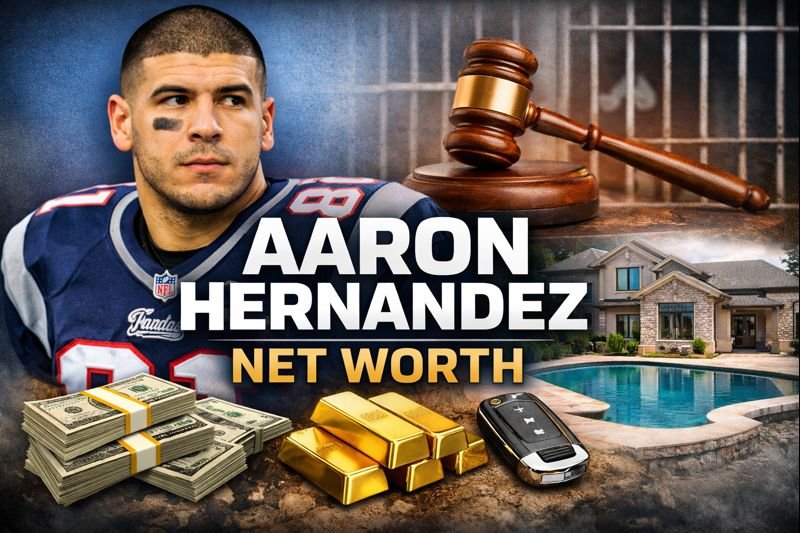
Aaron Hernandez Net Worth: A Complete Financial Breakdown
Aaron Hernandez remains one of the most complex and troubling figures in modern American sports history. Once celebrated as an elite NFL tight end with a lucrative contract and endorsement potential, his life took a dramatic turn that reshaped not only his legacy but also his finances. This article provides a clear, factual, and deeply researched breakdown of Aaron Hernandez net worth, explaining how much he earned, what he lost, and what financial lessons can be learned from his rise and fall.
This is an informational, people-first analysis written for readers who want accurate context, not sensationalism.
Understanding Aaron Hernandez’s Financial Story
Before discussing numbers, it is important to understand why this topic still draws interest. People searching for Hernandez’s wealth are usually looking for answers to questions such as:
- How much money did he make in the NFL?
- Did his family inherit anything?
- What happened to his contract and assets after his conviction and death?
- How does his case compare to other athletes who lost fortunes?
This article addresses all of those questions with verified information and transparent uncertainty where records are unclear.
Early Life and Financial Background
Aaron Hernandez was born on November 6, 1989, in Bristol, Connecticut. He grew up in a working-class household where football was not just a sport but a path to opportunity. His early life offers context for how quickly his financial circumstances changed.
High School and College Years
- Hernandez starred at Bristol Central High School.
- He earned a scholarship to the University of Florida.
- As a college athlete, he did not earn direct income due to NCAA rules at the time.
While he gained national recognition at Florida and won a BCS National Championship, he entered the NFL without personal wealth beyond family support and modest stipends.
NFL Career Earnings Explained
Hernandez entered the NFL with enormous promise, and his income reflected that potential.
Draft and Rookie Contract
- Drafted in the 4th round of the 2010 NFL Draft by the New England Patriots.
- Signed a rookie contract worth approximately $2.37 million over four years.
- Included a signing bonus of around $200,000.
At this stage, his earnings were solid but not elite by NFL standards.
Breakout Performance and Contract Extension
His performance quickly exceeded expectations:
- Became a key offensive weapon for the Patriots.
- Played in Super Bowl XLVI.
- Developed strong chemistry with quarterback Tom Brady.
In 2012, the Patriots rewarded him with a major contract extension:
- Five-year deal valued at roughly $40 million.
- About $12.5 million guaranteed.
This extension marked the peak of his earning power and public reputation.
Endorsements and Off-Field Income
Unlike superstar quarterbacks or wide receivers, Hernandez’s endorsement portfolio was limited.
Known Income Sources
- Small local endorsements tied to Patriots branding.
- Merchandise royalties related to team licensing.
He never secured long-term national endorsement deals. Industry analysts often attribute this to concerns about maturity, off-field behavior, and marketability, even before his legal issues surfaced.
Legal Troubles and Financial Collapse
In 2013, Hernandez was arrested and charged with the murder of Odin Lloyd. This single event reversed his financial trajectory almost overnight.
Immediate Financial Consequences
- The New England Patriots terminated his contract.
- Remaining guaranteed money was voided under contract morality clauses.
- Endorsement opportunities disappeared immediately.
From a financial perspective, this termination erased tens of millions in potential future income.
Net Worth at the Time of Death
Estimating Hernandez’s wealth is difficult due to sealed records, legal settlements, and estate obligations. However, multiple reputable financial and sports law analyses suggest the following:
Estimated Financial Standing
- Peak career earnings: approximately $14 to $15 million before taxes and expenses.
- Assets included cash, vehicles, and a home.
- Significant legal fees and civil liabilities reduced remaining assets.
At the time of his death in 2017, most estimates place his remaining estate value between zero and low seven figures, with some assessments suggesting his liabilities may have exceeded assets.
This makes Aaron Hernandez net worth at death far lower than many fans expect when considering his NFL contract alone.
Also read about HopTraveler.com Explained: Purpose, Content, and Value.
The Role of Legal Fees and Civil Lawsuits
One of the least understood aspects of Hernandez’s finances is how legal costs eroded his wealth.
Major Financial Drains
- Criminal defense attorneys over multiple trials.
- Civil wrongful death lawsuit settlement with Odin Lloyd’s family.
- Ongoing costs related to incarceration and appeals.
High-profile criminal defense can cost millions of dollars, and Hernandez faced several years of continuous legal action.
Estate Distribution and Family Impact
After his death, questions arose about who received what remained of his estate.
Key Points About His Estate
- Hernandez had a young daughter, who became the primary beneficiary.
- Some assets were protected through trusts.
- Life insurance policies were limited or contested due to conviction status.
Massachusetts law briefly vacated his conviction after his death, but this ruling was later reversed, limiting any potential financial recovery.
Comparison With Other NFL Financial Downfalls
Hernandez’s case is often compared with other athletes who lost fortunes, but his situation is unique.
How His Case Stands Apart
- Loss of income was sudden and total.
- Legal consequences eliminated both current and future earnings.
- Reputation damage prevented any post-career rehabilitation income.
Unlike athletes who recovered financially through media or business ventures, Hernandez had no such opportunity.
Mental Health, CTE, and Financial Ramifications
Posthumous examinations revealed that Hernandez suffered from severe chronic traumatic encephalopathy.
Financial Implications of CTE Findings
- Sparked public debate about NFL responsibility.
- No confirmed evidence that his estate received league compensation related to CTE.
- Highlighted long-term health risks tied to financial decision-making capacity.
The National Institutes of Health provides authoritative information on CTE and brain injury research, offering important medical context for cases like this
Key Financial Lessons From Aaron Hernandez’s Story
While tragic, his financial journey offers important lessons.
Practical Takeaways
- Guaranteed contracts are still conditional.
- Legal and personal conduct clauses matter.
- Wealth accumulation does not equal financial security.
- Estate planning is essential for high-earning individuals.
These insights are especially relevant for young athletes entering professional sports.
Common Myths About His Wealth
Several misconceptions continue to circulate online.
Clarifying the Record
- Myth: He died with tens of millions.
Fact: Most of his contract value was never paid. - Myth: His family received full NFL benefits.
Fact: Benefits were limited and contested. - Myth: His assets were fully protected.
Fact: Legal settlements significantly reduced the estate.
Frequently Asked Questions
How much money did Aaron Hernandez earn in the NFL?
He earned an estimated $14 to $15 million before taxes, agent fees, and legal costs.
Was his contract fully guaranteed?
No. Much of the contract depended on conduct clauses and active roster status.
Did his daughter inherit his money?
She was the primary beneficiary of his estate, but the amount was limited.
Did the Patriots owe him money after termination?
The team did not owe remaining contract money due to the nature of his release.
Was his conviction overturned after death?
It was briefly vacated, then later reinstated by Massachusetts courts.
Conclusion
Aaron Hernandez’s financial story is not one of sustained wealth, but of rapid rise followed by sudden collapse. Despite earning millions at a young age, legal troubles, contract termination, and mounting liabilities drastically reduced his estate. His case underscores how quickly professional success can unravel when personal conduct, mental health, and legal accountability intersect.