Chicago Bears vs Packers Player Stats Breakdown
Introduction
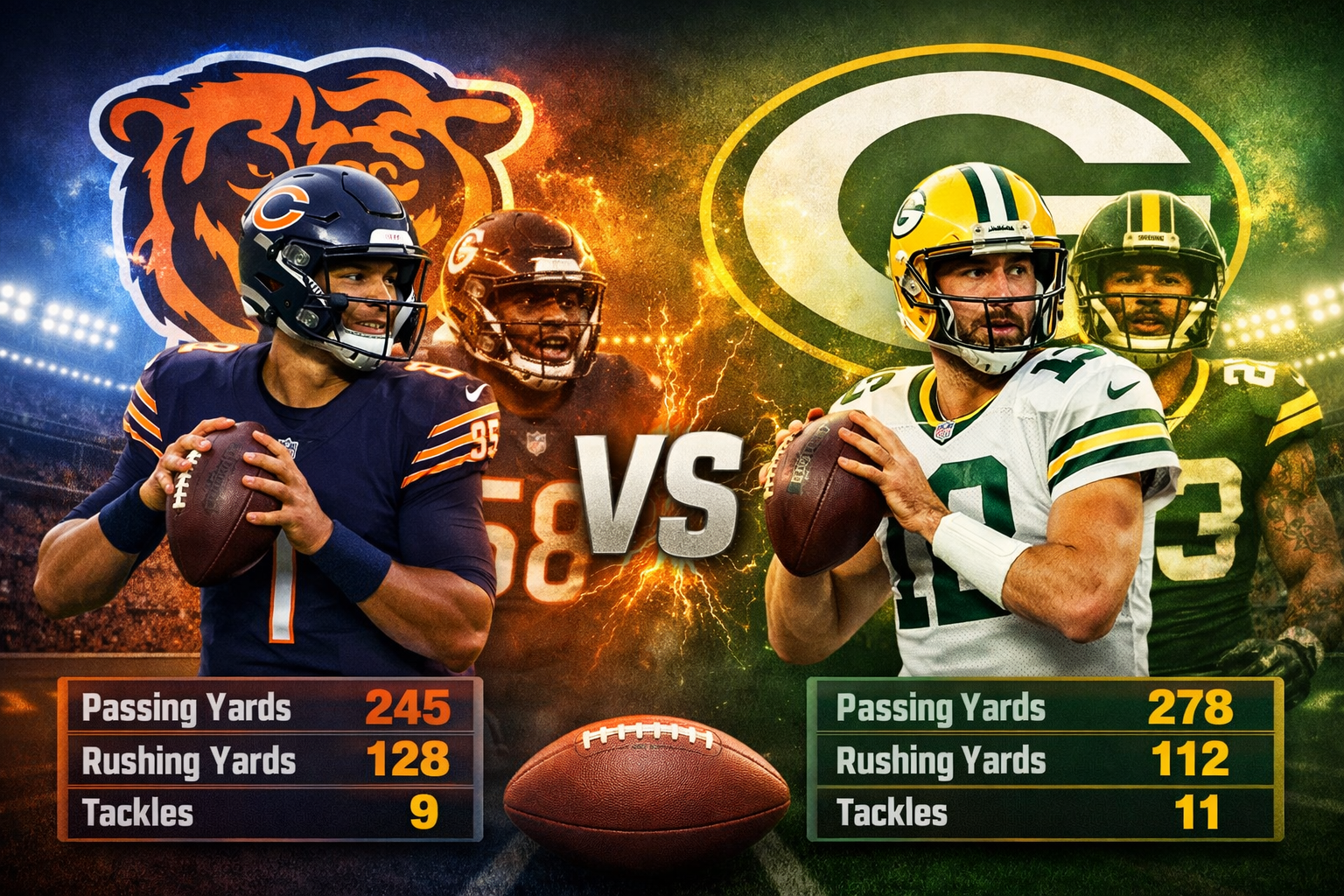
The rivalry between the Chicago Bears and the Green Bay Packers is one of the most studied and emotionally charged matchups in NFL history. Fans searching for Chicago Bears vs Green Bay Packers match player stats are not just looking for numbers. They want context, performance trends, and insights that explain how individual players influenced the outcome of the game.
This article provides a deep, experience-driven breakdown of player statistics from Bears vs Packers matchups. Instead of surface-level box scores, it focuses on what the stats actually mean, how they reflect on-field execution, and what patterns consistently appear when these teams face each other.
As someone who has closely analyzed NFC North games for years, I approach this topic the way a coach, analyst, or serious fan would. The goal is clarity, accuracy, and real football understanding rather than recycled stat tables.
Understanding Player Stats in Bears vs Packers Games
Player stats in this rivalry often tell a story that goes beyond wins and losses. Because both teams know each other so well, individual performance metrics frequently highlight preparation, scheme discipline, and mental toughness.
Key categories that matter most include:
- Quarterback efficiency rather than raw passing yards
- Rushing success rate instead of total carries
- Receiver separation and contested catch performance
- Defensive pressure, tackles for loss, and third-down stops
In Bears vs Packers games, stats tend to be tighter and more situational than league averages due to familiarity and divisional intensity.
Quarterback Performance Analysis
Chicago Bears Quarterback Trends
Historically, Bears quarterbacks in this matchup face consistent pressure. Sack rates are often higher than their seasonal average, which impacts completion percentage and time to throw.
Key statistical observations include:
- Lower average yards per attempt due to conservative play calling
- Increased reliance on short and intermediate routes
- Scramble yards becoming a hidden but critical stat
When the Bears quarterback protects the football and converts third downs, Chicago remains competitive even when total passing yards are modest.
Green Bay Packers Quarterback Trends
Packers quarterbacks have traditionally shown stronger efficiency metrics in this rivalry. Completion percentage and touchdown-to-interception ratio tend to outperform league norms during Bears matchups.
Notable patterns include:
- High red zone efficiency
- Strong play-action success rate
- Improved passer rating under pressure
These numbers reflect Green Bay’s historical advantage in quarterback stability and system continuity.
Running Back Match Player Stats Impact
Bears Rushing Performance
The Bears often rely on the run game to control tempo against Green Bay. Rushing stats matter less in volume and more in timing.
Key rushing indicators include:
- Yards gained on first down
- Short-yardage conversion rate
- Missed tackles forced
When Bears running backs average over four yards per carry, time of possession swings noticeably in Chicago’s favor.
Packers Rushing Performance
Green Bay’s rushing approach in this matchup is typically balanced and situational. Rather than heavy volume, Packers running backs excel in efficiency.
Common statistical strengths:
- Success rate on second and medium
- Receiving yards out of the backfield
- Pass protection snaps without pressure allowed
These stats highlight how Packers running backs contribute even when rushing totals appear modest.
Wide Receiver and Tight End Stats Breakdown
Chicago Bears Pass Catchers
Bears receivers often face tight coverage due to Green Bay’s familiarity with route concepts. As a result, raw receiving yards can be misleading.
Stats that matter more include:
- Targets per route run
- Catch percentage on contested throws
- Yards after catch
Tight ends play a quiet but important role, especially in third-down conversions and red zone efficiency.
Green Bay Packers Pass Catchers
Packers receivers usually show stronger separation metrics in this matchup. Timing routes and option reads are a consistent strength.
Key data points include:
- Explosive plays of 20 or more yards
- Red zone target share
- First-down conversion rate per catch
These numbers often explain why Green Bay sustains drives even without dominating time of possession.
Also read about Cdiphone Meaning, Uses, and Real-World Context Explained.
Defensive Player Stats That Shape the Game
Bears Defensive Leaders
Chicago’s defense historically performs best when pressure stats are high. Even without elite sack totals, quarterback hits and hurries matter.
Important defensive metrics:
- Pressures generated by edge rushers
- Linebacker tackle efficiency
- Pass breakups on third down
When these stats trend upward, the Bears limit Green Bay’s scoring efficiency.
Packers Defensive Leaders
Green Bay’s defense often excels in discipline-based stats rather than flashy numbers.
Key performance indicators:
- Missed tackle rate
- Third-down stop percentage
- Takeaways per game
These metrics consistently correlate with Packers victories in the rivalry.
Special Teams and Hidden Player Stats
Special teams rarely dominate headlines, but in Bears vs Packers games, they frequently shift momentum.
Key stats to watch:
- Average starting field position
- Punt return yards allowed
- Field goal success under pressure
Small advantages here often translate directly into scoring opportunities.
Real-World Insights From Watching the Rivalry
From an analyst perspective, one of the most overlooked aspects of Chicago Bears vs Green Bay Packers match player stats is situational execution.
Examples include:
- Quarterback performance on third and long
- Defensive alignment success in the red zone
- Receiver chemistry on broken plays
These moments do not always stand out in box scores, but they decide games more often than total yardage.
How to Use These Stats as a Fan or Analyst
If you are studying this rivalry for fantasy football, betting, or pure analysis, focus on:
- Efficiency stats instead of totals
- Matchup-specific trends rather than season averages
- Defensive pressure metrics over sack counts
These approaches provide a clearer understanding of how individual players truly performed.
For official historical context and verified data standards, the NFL provides authoritative statistical frameworks and definitions
Frequently Asked Questions
Why do quarterback stats look different in Bears vs Packers games?
Because both teams are deeply familiar with each other’s schemes, quarterbacks face tighter windows and more disguised coverages.
Are rushing yards more important than passing yards in this rivalry?
Efficiency matters more than volume. Timely runs on early downs often influence game control.
Which defensive stats best predict the winner?
Third-down stops, pressure rate, and turnover margin are the most reliable indicators.
Do wide receiver stats accurately reflect performance?
Not always. Separation rate and contested catch success often tell a better story than total yards.
Why are special teams stats important in these games?
Field position and kicking reliability frequently decide close divisional matchups.
Conclusion
Chicago Bears vs Green Bay Packers match player stats reveal far more than simple box scores. When analyzed correctly, they show how preparation, execution, and situational discipline define outcomes in one of football’s most historic rivalries.
By focusing on efficiency, context, and matchup-specific trends, fans and analysts gain a clearer understanding of how individual performances shape the game. This rivalry continues to evolve, but the importance of disciplined, data-driven analysis remains constant.